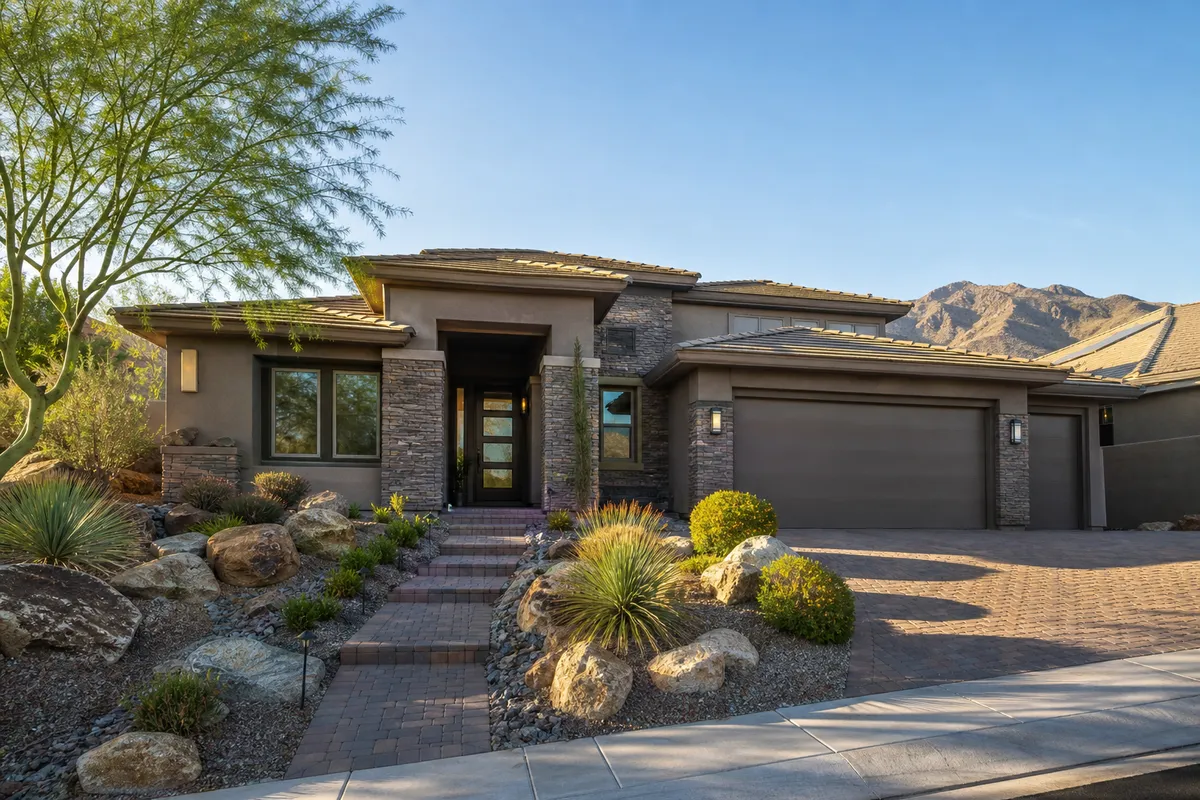
How Much Cash to Buy a House in Las Vegas 2026
¿Prefieres leer este artículo en español? Lee la versión en español aquí.
Quick Answer
How much cash you need to buy a house in Las Vegas depends on more than just the down payment.
For a financed purchase, think about four different buckets:
Down payment
Closing costs and prepaid expenses
Money you may pay before closing, such as earnest money, inspections, or an appraisal
Savings you want to keep after closing for moving, repairs, furnishings, and emergencies
For example, on a $500,000 home, the down payment alone could be:
Down Payment | Cash Amount |
|---|---|
3% | $15,000 |
3.5% | $17,500 |
5% | $25,000 |
10% | $50,000 |
20% | $100,000 |
Then you still need to account for closing costs and prepaid expenses.
The good news is that you can sometimes reduce your final cash to close with earnest money you already deposited, seller credits, lender credits, gift funds, or an eligible down-payment-assistance program.
The exact number should come from your lender's Loan Estimate, not from a generic online percentage. The Consumer Financial Protection Bureau explains that estimated cash to close includes the down payment and closing costs, then accounts for deposits already paid, seller credits, and other adjustments.
Key Takeaways
You do not automatically need 20% down to buy a home.
Some conventional programs allow eligible buyers to put as little as 3% down.
FHA financing can allow qualified purchase borrowers to finance up to 96.5% of the purchase price, which is equivalent to a 3.5% down payment.
Eligible VA buyers may be able to purchase without a down payment, although closing costs and a VA funding fee may still apply depending on the borrower.
Closing costs are separate from your down payment.
Earnest money is generally credited toward the amount you ultimately need at closing rather than becoming an additional purchase cost.
Seller and lender credits can reduce upfront cash, but they work differently.
Nevada offers down-payment-assistance programs for eligible buyers through the Nevada Housing Division.
The amount needed to close is different from the amount you should ideally have saved before buying.
What Does “Cash to Buy a House” Actually Mean?
This phrase creates a lot of confusion.
A buyer might ask:
“I have $25,000 saved. Is that enough to buy?”
There is no useful answer until we separate the money into categories.
Down payment
This is the portion of the purchase price you contribute instead of financing.
Closing costs
These are costs connected with obtaining the mortgage and completing the transaction.
Prepaids
These are amounts collected in advance for items such as homeowners insurance, prepaid interest, and money needed to establish an escrow account for future taxes and insurance.
Upfront expenses
Some expenses may be paid before closing rather than on closing day.
Examples can include:
Earnest money
Home inspection
Specialized inspections
Appraisal
Certain lender charges
Post-closing reserves
This is money you intentionally keep rather than putting every available dollar into the transaction.
That distinction is important.
The minimum cash necessary to close is not necessarily the amount of savings that makes you financially comfortable owning the home.
If you're beginning the process, my home-buying resources can help you organize your budget, financing, timeline, and home search before you start making offers.
How Much Down Payment Do You Need in Las Vegas?
Las Vegas does not have a special citywide down payment requirement.
Your minimum down payment generally depends on the mortgage program, your qualifications, property type, occupancy, loan amount, lender underwriting, and other factors.
Can You Buy With 3% Down?
Some conventional mortgage programs allow qualified borrowers to purchase with as little as 3% down.
For example, Fannie Mae's HomeReady program advertises down payments as low as 3% for eligible borrowers, with eligibility requirements that include income and occupancy rules. Freddie Mac also offers low-down-payment programs such as Home Possible.
On a $500,000 purchase:
3% = $15,000
But that $15,000 is only the down payment.
It does not automatically include your other closing expenses.
How Much Do You Need Down With FHA?
FHA is another low-down-payment option.
HUD's current FHA guidance permits maximum purchase financing of 96.5% loan-to-value for qualifying borrowers, which means a minimum equity contribution equivalent to 3.5%. Borrowers with lower qualifying credit scores can face lower permitted loan-to-value ratios, and individual lenders may impose additional requirements.
Examples:
$400,000 home × 3.5% = $14,000
$500,000 home × 3.5% = $17,500
$600,000 home × 3.5% = $21,000
Again, that is the down payment—not total cash needed.
Can You Buy With a VA Loan and No Down Payment?
Eligible Veterans, service members, and certain surviving spouses may be able to use VA financing without a down payment when program requirements are met.
The VA states that a VA-backed purchase loan often allows no down payment when the sales price does not exceed the appraised value. Borrowers must still meet VA and lender qualification requirements.
That does not necessarily mean zero cash.
A VA buyer may still have:
Closing costs
Prepaid taxes and insurance
Earnest money before closing
Inspection expenses
A VA funding fee, unless exempt
Other transaction-specific costs
The VA notes that the funding fee applies to many VA borrowers but that certain borrowers are exempt.
Does Putting 20% Down Still Matter?
Twenty percent is not a universal requirement.
But it may change the financing structure.
Depending on the loan, putting more money down may affect:
Loan amount
Monthly principal and interest
Mortgage insurance
Interest-rate pricing
Qualification
Cash reserves after closing
That does not mean the largest possible down payment is automatically the best choice.
A buyer should compare the effect of the down payment on the entire financial picture, including how much money remains after closing.
How Much Down Payment Is Needed at Different Las Vegas Price Points?
Here is a simple illustration:
Home Price | 3% | 3.5% | 5% | 10% | 20% |
|---|---|---|---|---|---|
$400,000 | $12,000 | $14,000 | $20,000 | $40,000 | $80,000 |
$500,000 | $15,000 | $17,500 | $25,000 | $50,000 | $100,000 |
$600,000 | $18,000 | $21,000 | $30,000 | $60,000 | $120,000 |
These numbers illustrate the down payment only.
They do not include closing costs, prepaids, inspections, moving expenses, or reserves.
That is why asking only, “How much do I need for a down payment?” can underestimate the true amount of cash needed to purchase.
What Closing Costs Does a Las Vegas Buyer Need to Plan For?
Closing costs vary by loan, lender, purchase agreement, property, title company, insurance, and other factors.
They can include items such as:
Loan origination charges
Underwriting or processing charges
Appraisal
Title-related costs
Escrow or settlement charges
Recording and government charges
Discount points, if purchased
Prepaid interest
Homeowners insurance
Initial escrow deposits for taxes and insurance
Other property- or loan-specific charges
The CFPB separates closing costs from your down payment and shows the individual categories on the Loan Estimate and Closing Disclosure.
This is why I would not recommend estimating your purchase solely by saying:
“I'll put 5% down, so that's all the cash I need.”
It usually is not.
What Are Prepaids, and Why Do They Increase Cash to Close?
Prepaids confuse many first-time buyers because they are not necessarily fees.
For example, part of your cash at closing may be used to:
Pay the first year of homeowners insurance
Pay interest from closing through the end of the month
Establish an escrow balance for future taxes
Establish an escrow balance for future insurance
That money is serving a real future expense.
It is different from paying a lender or service provider for work performed.
The CFPB's Closing Disclosure guidance specifically separates prepaids and the initial escrow payment from other loan and settlement costs.
Is Earnest Money Extra Money on Top of Your Closing Cash?
Usually, you should think of earnest money as money paid earlier, rather than an entirely separate cost.
When your offer is accepted, your purchase agreement may require an earnest-money deposit.
The amount and timing depend on the contract.
If the transaction closes normally, the money you already deposited is generally accounted for toward the funds you owe in the transaction.
The CFPB's cash-to-close calculation specifically accounts for deposits that a buyer has already paid.
For example:
Suppose your final required funds are calculated at $30,000 and you already deposited $7,500 in earnest money.
You generally would not bring another $30,000 as though the deposit never happened.
The deposit should be reflected in the transaction's final accounting.
Your lender and escrow officer will provide the exact figure.
What Costs Might You Pay Before Closing?
Your bank account can start changing before closing day.
Depending on the transaction, you may pay for things such as:
Earnest money
General home inspection
Pool inspection
Sewer or plumbing inspection
Other specialized inspections
Appraisal
That means there are really two useful questions:
How much cash will I need throughout the transaction?
and:
How much will I need to bring at closing?
They are not always the same number.
Can a Seller Help With Your Closing Costs?
Potentially, yes.
A seller credit or seller concession can be negotiated as part of a purchase agreement.
The credit may reduce certain allowable buyer costs, depending on the loan program and transaction.
The CFPB notes that seller credits are part of the calculation used to determine a buyer's final cash to close.
But do not assume every seller will agree.
Whether a seller credit makes sense can depend on:
The property
Price
Competition
Offer strength
Appraisal
Seller priorities
Loan program
Amount requested
There may also be loan-program limits on seller contributions.
Your lender should verify what is permitted before you structure the offer.
Is a Seller Credit Better Than a Lower Price?
It depends on the buyer's problem.
Suppose you negotiate $10,000.
You might use that negotiation to seek a lower purchase price.
Or, if permitted, you might seek a seller credit toward allowable closing costs.
Those two choices do different things.
A price reduction
May reduce:
Loan amount
Monthly principal and interest
Total interest over time
A closing-cost credit
May reduce:
Cash required upfront
For a buyer who has adequate income but limited cash, reducing the amount needed at closing may be more useful than a modest price reduction.
For a buyer whose monthly payment is the primary concern, the calculation may look different.
That decision should be modeled with your lender using the actual loan terms.
How Do Lender Credits Reduce Cash to Close?
A lender credit is different from a seller credit.
With lender credits, the lender provides money to offset closing costs, usually in exchange for a higher interest rate.
The CFPB describes lender credits as essentially the reverse of discount points: you pay less upfront, but generally pay more over time because of the higher rate.
That can be useful in the right situation.
But compare:
Interest rate
APR
Lender fees
Credit amount
Monthly payment
Cash to close
Expected length of ownership
A smaller cash requirement today is not automatically the least expensive option long term.
Can Nevada Down-Payment Assistance Reduce the Cash You Need?
Possibly.
The Nevada Housing Division operates Home Is Possible programs for eligible Nevada buyers.
Current program information shows assistance options that can help with down payment and, depending on the program, closing costs. Eligibility varies by program and can include income limits, purchase-price limits, minimum credit requirements, homebuyer education, occupancy requirements, and approved-lender participation.
Some current Home Is Possible assistance is structured as a second mortgage, so buyers should understand repayment terms rather than assuming all assistance is a grant or free money.
Program terms and rates can change.
If you're considering assistance, your lender should compare:
Whether you qualify.
How much assistance is available.
The interest rate attached to the first mortgage.
Whether the assistance is repayable.
The effect on your monthly payment and long-term costs.
That comparison is much more useful than focusing only on the advertised assistance amount.
Does New Construction Change How Much Cash You Need?
It can.
A new-construction purchase may involve a different cash timeline from a resale transaction.
Depending on the builder and contract, buyers may encounter:
Initial deposits
Lot deposits
Upgrade deposits
Design-center payments
Closing costs
Builder lender incentives
Interest-rate incentives
Closing-cost credits
Some builder incentives can reduce cash needed at closing.
But the home itself can also become more expensive after lot premiums and upgrades are added.
For a deeper explanation of incentives, financing, deposits, lots, and builder representation, my new-construction buyer-agent guide explains what Henderson buyers should review before registering with a builder.
If you are deciding between a builder home and resale, my Buy or Build in Las Vegas Valley? 2026 Cost Comparison goes further into the complete-cost comparison.
Should You Spend All Your Savings on the Purchase?
Cash to close and financial readiness are not the same thing.
Suppose you have $35,000 available and your lender estimates that the transaction requires $34,000.
Technically, you may be close to the required amount.
But you also need to think about what happens after you receive the keys.
Possible expenses include:
Moving
Utility deposits
Furniture
Appliances
Repairs
Landscaping
HOA charges
Insurance deductibles
Unexpected maintenance
Everyday emergencies
Your lender may also require reserves for certain loan scenarios.
The goal is to understand the complete picture before committing—not simply determine the absolute minimum amount that gets you through closing.
How Can You Estimate the Number Before Shopping?
Start with four numbers.
1. Target purchase price
How much home are you realistically considering?
2. Likely loan program
FHA?
Conventional?
VA?
Another eligible program?
3. Estimated closing costs and prepaids
Ask your lender for an estimate based on your actual scenario.
4. Available savings
How much can you comfortably use while still maintaining appropriate reserves?
You can use my mortgage calculator as an initial planning tool for monthly-payment comparisons, but the lender's Loan Estimate is what should be used to understand the detailed financing and estimated cash-to-close figures.
Practical Las Vegas Buyer Cash Checklist
Before you start touring homes, know the answers to these questions:
What purchase-price range am I considering?
Which loan programs might I qualify for?
What down payment would each program require?
What are the estimated lender costs?
How much should I expect in prepaid taxes and insurance?
How much earnest money could I comfortably deposit?
What inspection costs should I plan for?
Could I qualify for gift funds or down-payment assistance?
Are seller credits permitted under my loan?
What lender-credit options are available?
How much money will I still have after closing?
Does the final monthly payment fit comfortably within my budget?
Once those questions are answered, home shopping becomes much more useful because you know both your price range and your cash requirements.
Alejandro's Local Take
When someone tells me:
“I have $20,000. Can I buy a house?”
I do not want to answer that by guessing.
We need to look at:
Purchase price
Loan program
Down payment
Closing costs
Prepaids
Earnest money
Available credits
Assistance programs
Monthly payment
Money remaining after closing
Two buyers purchasing the same $450,000 home could need very different amounts of cash because their financing is different.
That is why I prefer buyers to talk with a lender before we start seriously touring homes.
Not because you need to commit to buying immediately.
It is because once you know the numbers, you can make better decisions.
Then we can use the home-buying process to narrow the search around the payment, cash requirement, type of home, and areas that actually fit your plan.
Frequently Asked Questions
How much cash do I need to buy a $500,000 house in Las Vegas?
It depends on your loan.
The down payment alone could be approximately:
3% = $15,000
3.5% = $17,500
5% = $25,000
10% = $50,000
20% = $100,000
Then add the closing costs and prepaids applicable to your transaction.
Finally, subtract deposits already paid and allowable seller, lender, assistance, or other credits reflected in your final closing calculation.
Can I buy a Las Vegas house with 3% down?
Some qualified borrowers can.
Conventional programs including Fannie Mae HomeReady and Freddie Mac Home Possible allow down payments as low as 3% for eligible borrowers. Requirements vary.
Can I buy with 3.5% down using FHA?
Qualified FHA borrowers may be eligible for a maximum of 96.5% purchase financing, which corresponds to 3.5% down. Credit, underwriting, lender requirements, property eligibility, and other factors still apply.
Can I buy in Las Vegas with no down payment using VA financing?
Eligible VA borrowers can often obtain a VA-backed purchase loan without a down payment when program conditions are satisfied, including requirements related to eligibility, lender underwriting, purchase price, and appraised value.
Are closing costs included in my down payment?
No.
Your down payment and closing costs are different parts of the transaction.
The CFPB's Loan Estimate separately shows estimated closing costs and estimated cash to close.
Does earnest money reduce my cash to close?
Generally, earnest money that you have already deposited is accounted for in the final cash-to-close calculation if the transaction proceeds to closing.
Can a seller pay all my closing costs?
Do not assume so.
Seller credits are negotiable and are subject to the purchase agreement and the limits of your mortgage program.
Your lender should calculate the maximum permitted contribution for your specific loan before the offer is written.
Is down-payment assistance available in Las Vegas?
Yes, programs exist for eligible Nevada buyers.
The Nevada Housing Division's Home Is Possible programs currently offer several assistance options, but income limits, purchase-price limits, credit requirements, rates, repayment terms, and available assistance differ by program and can change.
How do I know my exact cash-to-close amount?
Start with your Loan Estimate after applying for financing.
As closing approaches, your Closing Disclosure provides the updated figures.
Your lender and escrow officer should explain how the final amount was calculated and what funds have already been credited toward the transaction.
Know the Number Before You Start Shopping
Buying a home in Las Vegas or Henderson does not automatically require 20% down.
But the down payment is only one part of the cash equation.
Before you choose homes based on price alone, understand:
Your loan options
Required down payment
Estimated closing costs
Prepaids
Earnest-money requirements
Possible assistance
Available seller or lender credits
Monthly payment
Savings remaining after closing
Start with my home-buying resources to organize your search and financing plan.
If you are considering new construction, builder incentives, or comparing new and resale homes, my Buy or Build in Las Vegas Valley? 2026 Cost Comparison provides the next level of comparison.
When you are ready to discuss the neighborhoods, homes, and buying strategy that fit your numbers, contact Alejandro Grimaldo.
About Alejandro
Alejandro Grimaldo is a Nevada real estate agent with United Realty Group, serving Las Vegas, Henderson, and Southern Nevada. He helps buyers understand the home-buying process, compare resale and new-construction options, evaluate communities, and coordinate the real estate side of a purchase with clear, practical guidance.
Alejandro Grimaldo
United Realty Group
Nevada Real Estate License S.0175370
725-425-1414
Equal Housing Opportunity.
Disclaimer
This article provides general real estate information only and is not legal, tax, accounting, lending, credit, investment, or financial advice. Mortgage programs, down-payment requirements, credit guidelines, seller-contribution limits, lender credits, assistance programs, interest rates, insurance, closing costs, property taxes, and underwriting requirements can change and vary by borrower, lender, property, and loan. Buyers should verify current requirements, costs, program eligibility, repayment terms, and estimated cash to close with an appropriately licensed lender, escrow officer, insurance professional, tax professional, attorney, government agency, or other qualified professional before making a decision.